

What Is Electronic Invoicing? A Complete Guide for Businesses
Electronic invoicing, also called e-invoicing, is the process of creating, sending, receiving, and storing invoices in a structured digital format instead of using paper invoices, PDFs, or manual invoice documents.
In simple words, electronic invoicing helps businesses manage invoices digitally from creation to delivery, tracking, accounting, tax records, and document storage.
For many businesses, invoicing is one of the most important financial workflows. Every invoice affects revenue, customer payments, VAT records, tax compliance, accounting entries, cash flow, and financial reports. When invoices are created manually or stored in separate folders, the process becomes slow, difficult to track, and more exposed to errors.
Electronic invoicing helps solve this problem by making invoice data structured, easier to process, and easier to connect with accounting and tax systems. Bilansys helps businesses, accountants, and finance teams manage e-invoices, XML invoice records, invoice status, customer and supplier invoice data, tax records, documents, accounting entries, and AI automation from one connected platform.
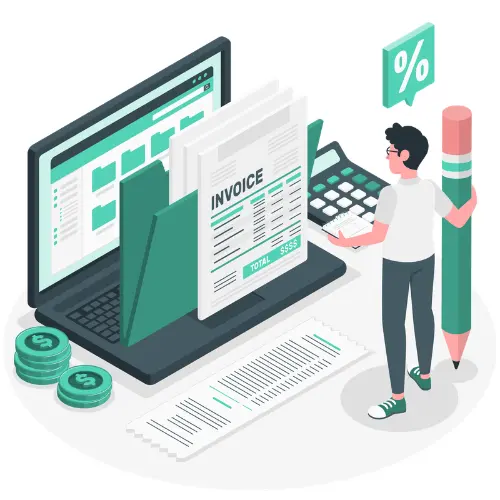
What Is Electronic Invoicing?
Electronic invoicing is a digital invoicing process where invoices are created, exchanged, received, and stored in a structured electronic format.
A normal invoice may be created as a PDF, printed document, Word file, or spreadsheet. These formats can show invoice information, but they are not always easy for systems to read automatically. An electronic invoice is different because it contains invoice data in a structured format. This makes it easier for accounting systems, tax platforms, and business software to process the invoice automatically.
An electronic invoice can include details such as the supplier name, customer name, VAT number, invoice number, invoice date, products or services, tax amount, total amount, payment terms, and delivery information. The main purpose of electronic invoicing is to make invoice processing faster, more accurate, and easier to control. In many countries, electronic invoicing is also connected with tax compliance.
For example, Italy uses the Sistema di Interscambio, also called SDI, to manage electronic invoices. The European Commission says Italy uses SDI to check that each e-invoice is correctly formatted before forwarding it to the right recipient or authority.
Electronic Invoicing vs Paper Invoicing
Paper invoicing is the traditional way of sending invoices. A business creates an invoice, prints it, sends it by post or email, and then the recipient manually enters the details into their accounting system. This process can work for very small operations, but it becomes difficult when invoice volume grows.
Electronic invoicing makes the invoice process more structured. Instead of relying on paper, PDFs, or manual typing, invoice data is created and exchanged digitally.
| Area | Paper or Manual Invoicing | Electronic Invoicing |
|---|---|---|
| Invoice creation | Manual or template-based | Digital and structured |
| Delivery | Email, post, or upload | Digital invoice channel |
| Data entry | Often manual | Easier to process automatically |
| Errors | Higher risk | Lower risk with structured data |
| Tracking | Hard to monitor | Status can be tracked more clearly |
| Storage | Paper files or folders | Digital archive |
| Accounting | Re-entered manually | Can connect with accounting workflows |
| Compliance | Harder to control | Easier to organize and validate |
The main difference is that electronic invoicing is not only about sending an invoice by email. A PDF invoice sent by email is digital, but it is not always a true electronic invoice if the data is not structured and processable by systems.
Is a PDF Invoice the Same as an Electronic Invoice?
No, a PDF invoice is not always the same as an electronic invoice. A PDF invoice is a digital file that people can read. But many PDF invoices are not structured for automatic processing. Someone may still need to open the PDF, read the information, and manually enter the data into accounting software.
A true electronic invoice usually contains structured data that can be processed by systems. In Italy, electronic invoices are commonly connected with XML-based formats and SDI workflows. The Italian Revenue Agency says electronic invoices must be sent to the Exchange System, also known as SDI in Italian.
In simple terms:
PDF invoice = human-readable digital invoice
Electronic invoice = structured digital invoice that systems can process
This is why e-invoicing is more powerful than simply emailing invoices as PDFs.
How Does Electronic Invoicing Work?
Electronic invoicing usually follows a clear workflow from invoice creation to delivery, validation, storage, and accounting. The exact process can change depending on the country, platform, and compliance rules, but the general workflow is similar.
1. Invoice data is created
The business creates an invoice using invoicing software, accounting software, ERP software, or an e-invoicing platform. The invoice includes business details, customer details, invoice number, invoice date, product or service details, VAT information, total amount, and payment terms.
2. The invoice is converted into a structured format
The invoice data is converted into a structured digital format. In many e-invoicing systems, this can be XML or another structured standard. This structured format helps software systems read and process invoice data.
3. The invoice is sent through a digital channel
The invoice is sent through an approved digital channel, platform, network, or exchange system. In Italy, invoices are sent through SDI. The Italian Revenue Agency explains that invoices must be sent to customers through SDI; otherwise, they are considered not issued for the relevant e-invoicing process.
4. The invoice is checked or validated
Depending on the country and system, the invoice may be checked for required data, format, VAT details, sender information, recipient information, and delivery details. Italy’s SDI system checks invoice formatting and routing before forwarding invoices.
5. The invoice is delivered to the recipient
Once the invoice passes the required checks, it is delivered to the customer, business, accountant, public authority, or digital invoice platform.
6. The invoice is stored and connected with records
After delivery, the invoice can be stored in a digital archive and connected with accounting entries, VAT records, payment status, customer balances, and reports.
Bilansys helps businesses manage this full workflow by connecting e-invoicing with accounting & general ledger, tax & compliance, reporting and analytics, document management, and AI automation.
Why Is Electronic Invoicing Important?
Electronic invoicing is important because invoices are connected with many business activities.
An invoice is not just a payment request. It affects accounting records, customer balances, cash flow, VAT, tax reports, document storage, and financial decision-making.
When invoice workflows are manual, businesses may face problems such as late invoice creation, wrong customer data, missing invoice files, duplicate records, payment delays, tax confusion, and slow reporting. Electronic invoicing helps reduce these problems by making invoice data structured and easier to manage.
For businesses in Italy and Europe, e-invoicing is becoming even more important because governments are moving toward more digital VAT reporting and invoice control. The European Commission’s VAT in the Digital Age initiative introduces real-time digital reporting for cross-border trade based on e-invoicing, which shows the direction of tax digitization in Europe.
This means businesses should not see electronic invoicing only as a technical requirement. It is part of the future of accounting, tax compliance, and financial automation.
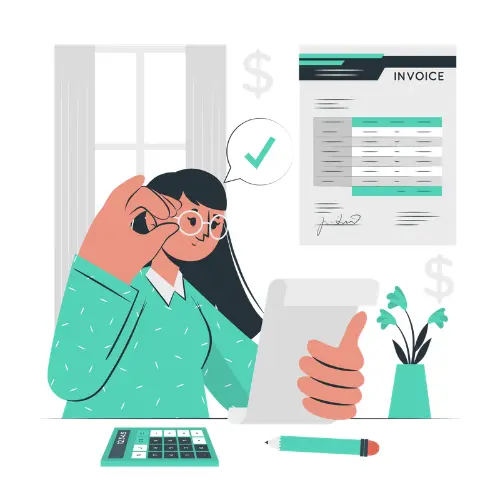
Benefits of Electronic Invoicing
Electronic invoicing gives businesses practical benefits across finance, accounting, tax, and operations.
Faster invoice processing
Manual invoicing takes time. A person may need to create the invoice, check details, send it, save the document, update a spreadsheet, and later record payment. E-invoicing makes the process faster because invoice data is created and exchanged digitally.
Fewer manual errors
Manual invoice entry can create mistakes. A wrong VAT number, incorrect invoice amount, missing field, or duplicate record can create accounting and tax issues. Electronic invoicing reduces many of these risks because invoice data is structured and can be validated before processing.
Better invoice tracking
With manual invoicing, it can be hard to know whether an invoice was sent, received, accepted, paid, rejected, or still pending. Electronic invoicing makes invoice status easier to monitor.
Better accounting connection
Invoices affect accounting entries. When invoice data is digital and structured, it becomes easier to connect invoices with revenue, expenses, customer balances, supplier balances, VAT data, and reports.
Easier tax compliance
Electronic invoicing supports tax compliance because invoice data is cleaner, better organized, and easier to review. This is especially important in Italy, where e-invoicing is closely connected with SDI and tax workflows.
Better document organization
Invoices need to be stored safely for future reference, tax checks, audits, and internal review. Electronic invoicing makes it easier to organize invoice files, XML records, attachments, receipts, delivery notes, and supporting documents.
Improved cash flow visibility
When invoices are tracked properly, businesses can monitor paid, unpaid, overdue, and partially paid invoices more clearly. This helps improve cash flow planning and payment follow-up.
Electronic Invoicing in Italy
Italy is one of the most important countries in Europe for e-invoicing because it has a strong mandatory electronic invoicing system.
Italy uses the Sistema di Interscambio, or SDI, to manage electronic invoices. This system receives, checks, and delivers invoices. The European Commission describes SDI as the system Italy uses to manage electronic invoices and check that invoices are correctly formatted before sending them to the correct recipient or public authority.
- Fattura elettronica.
- Sistema di Interscambio.
- SDI.
- Codice destinatario.
- Codice SDI.
- Fattura XML.
- FatturaPA.
- PEC.
- Conservazione digitale.
For a business operating in Italy, these terms matter because they affect invoice delivery, tax records, accounting workflows, and compliance.
Bilansys helps businesses and accountants manage e-invoicing workflows by organizing electronic invoices, XML invoice data, SDI-related details, documents, accounting records, VAT data, and invoice status in one platform.
What Is SDI in Electronic Invoicing?
SDI stands for Sistema di Interscambio. It is the Italian exchange system used for electronic invoicing. The SDI receives electronic invoices, checks required data, and delivers invoices to the correct recipient channel.
Think of it like this:
Supplier → SDI → Customer
The invoice does not simply go directly from the supplier to the customer. It passes through SDI, which acts as the official exchange system.
For businesses, this means invoice data must be accurate. Customer details, VAT information, delivery code, XML structure, and other required fields need to be correct. If the invoice has problems, it may be rejected or require correction.
Bilansys helps reduce confusion by keeping invoice data, customer records, XML files, invoice status, accounting entries, and tax documents organized in one system.
What Is an XML Invoice?
An XML invoice is a structured digital invoice file that stores invoice data in a format software can read.
Unlike a PDF, which is mainly designed for people to read, XML is designed for systems to process. An XML invoice may include supplier details, customer details, VAT number, invoice number, date, item lines, tax rates, payment terms, total amount, and recipient information.
In Italy, e-invoicing is strongly connected with XML invoice formats and SDI workflows. For businesses, XML invoices help make invoice processing more automated, consistent, and easier to connect with accounting records.
Electronic Invoicing in Europe
Electronic invoicing is becoming more important across Europe. Many countries are moving toward digital invoice reporting, structured invoices, and stronger VAT control. The European Commission’s VAT in the Digital Age package is designed to modernize VAT rules and includes real-time digital reporting for cross-border trade based on e-invoicing.
This shows that European businesses should prepare for more digital invoice and VAT workflows.
Even if a business is not currently required to use e-invoicing in every situation, adopting better invoice management systems can help prepare for future compliance changes.
For companies working across Italy and Europe, this means electronic invoicing should be part of a wider financial management strategy. Bilansys supports this by connecting e-invoicing with accounting, tax compliance, document management, reporting, bank reconciliation, AI automation, and secure access control.
Electronic Invoicing and Tax Compliance
Electronic invoicing is closely connected with tax compliance because invoice data is used for VAT records, declarations, audits, and financial reporting. If invoice data is wrong, tax records can also become wrong.
For example, if VAT information is missing or incorrect, the business may need to correct tax records later. If invoice documents are not stored properly, the business may struggle during tax review. If invoice status is unclear, accounting reports may not reflect the real financial position.
Electronic invoicing helps tax compliance by making invoice data more structured and easier to review. Bilansys helps businesses connect e-invoices with VAT records, tax documents, reporting workflows, document archives, and compliance processes.
Electronic Invoicing and Accounting
Invoices are one of the main sources of accounting data. Sales invoices affect revenue and customer balances. Purchase invoices affect expenses and supplier balances. VAT information affects tax records. Payment status affects cash flow.
When invoicing is disconnected from accounting, teams must enter the same information multiple times. This creates extra work and increases the risk of errors.
Electronic invoicing helps by making invoice data easier to connect with accounting entries. Bilansys connects invoicing with accounting and general ledger workflows, helping businesses reduce duplicate work and keep financial records more accurate.
Electronic Invoicing and Document Management
If invoices are stored in email folders, local computers, or scattered cloud drives, they become difficult to find. Electronic invoicing works best when connected with document management.
Bilansys helps store invoice records, XML files, receipts, delivery notes, tax documents, and supporting files in a secure digital archive. This makes invoices easier to find, review, share, and connect with accounting records.


Electronic Invoicing and Cash Flow
Electronic invoicing can also improve cash flow visibility. Cash flow depends on how quickly invoices are issued, received, approved, and paid.
If invoices are delayed, payments can be delayed. If invoice status is unclear, follow-up becomes harder. If unpaid invoices are not tracked, the business may face cash pressure. With a better e-invoicing workflow, businesses can track invoice status and customer payments more clearly.
Bilansys helps finance teams monitor paid, unpaid, overdue, and partially paid invoices. This helps businesses understand expected cash inflow and act earlier when payments are delayed.
Electronic Invoicing and AI Automation
AI can make electronic invoicing even more efficient. AI can help with invoice matching, duplicate invoice detection, receipt reading, expense category suggestions, bank movement association, and financial alerts.
For example, if a payment appears in the bank account, AI-supported workflows can help suggest which invoice it may relate to. If two similar invoices appear, the system can help detect possible duplication.
AI does not replace accountants or finance teams. It supports them by reducing repetitive work and helping them focus on review, control, and decision-making. Bilansys uses AI automation to help businesses manage invoice and accounting workflows with less manual effort.

Who Needs Electronic Invoicing?
Electronic invoicing is useful for many types of businesses and professionals. Small businesses use it to create and track invoices more easily. SMEs use it to manage higher invoice volumes and improve cash flow visibility. Enterprises use it to handle large invoice workflows, compliance requirements, and document control. Accountants use it to manage invoice data for clients. Finance teams use it to connect invoices with payments, reports, and reconciliation.
Electronic invoicing is especially important for businesses working in Italy because invoice workflows are strongly connected with SDI and tax requirements. Bilansys is suitable for businesses, accountants, finance teams, and enterprises that need a connected e-invoicing and accounting workflow.
Common Electronic Invoicing Problems
Even with electronic invoicing, businesses can still face problems if they use disconnected tools or poorly organized workflows.
Common issues include incorrect customer data, wrong SDI code, missing VAT information, rejected XML invoices, duplicate invoices, unclear invoice status, missing documents, late payments, and poor connection with accounting records.
These problems often happen when invoicing is managed separately from accounting, documents, tax data, and payment tracking. Bilansys helps solve these issues by giving users one connected platform for invoices, documents, accounting, tax records, reporting, bank reconciliation, and automation.

How Bilansys Helps with Electronic Invoicing
Bilansys helps businesses and accountants manage electronic invoicing in a more structured way.
With Bilansys, users can manage e-invoices, XML invoice records, SDI-related invoice data, customer invoice data, supplier invoice data, invoice status, invoice documents, accounting entries, VAT and tax records, digital document archives, and AI automation.
Bilansys connects e-invoicing with the wider financial workflow. This means your team does not need to manage invoices in one tool, tax data in another tool, documents in separate folders, and accounting records somewhere else.
Bilansys brings these workflows together so businesses can improve invoice visibility, reduce manual work, and keep financial records more organized.
Conclusion
Electronic invoicing is more than sending invoices digitally. It is a structured way to create, send, receive, validate, store, and manage invoice data. It helps businesses reduce manual work, improve invoice accuracy, track payments more clearly, support tax compliance, and connect invoices with accounting and reporting.
For Italy, electronic invoicing is especially important because invoices pass through the Sistema di Interscambio, and businesses need accurate invoice data, XML records, SDI details, and proper document organization. Across Europe, digital invoice and VAT reporting requirements are becoming more important, so businesses should prepare with better financial systems. If your business wants a cleaner and more controlled way to manage invoices, Bilansys can help turn electronic invoicing into a stronger financial workflow.
frequently asked questions

Electronic invoicing is the process of creating, sending, receiving, and storing invoices in a structured digital format that can be processed by business, accounting, or tax systems.
A PDF invoice is digital, but it is not always a true electronic invoice. A true electronic invoice usually contains structured data that software systems can process automatically.
Electronic invoicing works by creating invoice data in a structured format, sending it through a digital channel or exchange system, checking the invoice, delivering it to the recipient, and storing it for accounting and tax records.
E-invoicing in Italy is the electronic invoice process managed through the Sistema di Interscambio, or SDI. The SDI receives, checks, and delivers electronic invoices.
SDI means Sistema di Interscambio. It is the Italian exchange system used to receive, check, and deliver electronic invoices to the correct recipient.
An XML invoice is a structured digital invoice file that stores invoice data in a format software can read and process.
Electronic invoicing is important because it reduces manual work, improves invoice accuracy, supports tax compliance, helps track invoice status, and connects invoices with accounting and reporting.
The main benefits include faster invoice processing, fewer errors, better payment tracking, improved tax compliance, easier document storage, better cash flow visibility, and stronger financial control.
Yes. Electronic invoicing helps organize invoice data, VAT records, tax documents, delivery status, and audit-ready invoice records.
Yes. Bilansys helps businesses manage e-invoices, XML invoice records, invoice status, customer and supplier invoice data, accounting entries, tax records, documents, and AI automation.